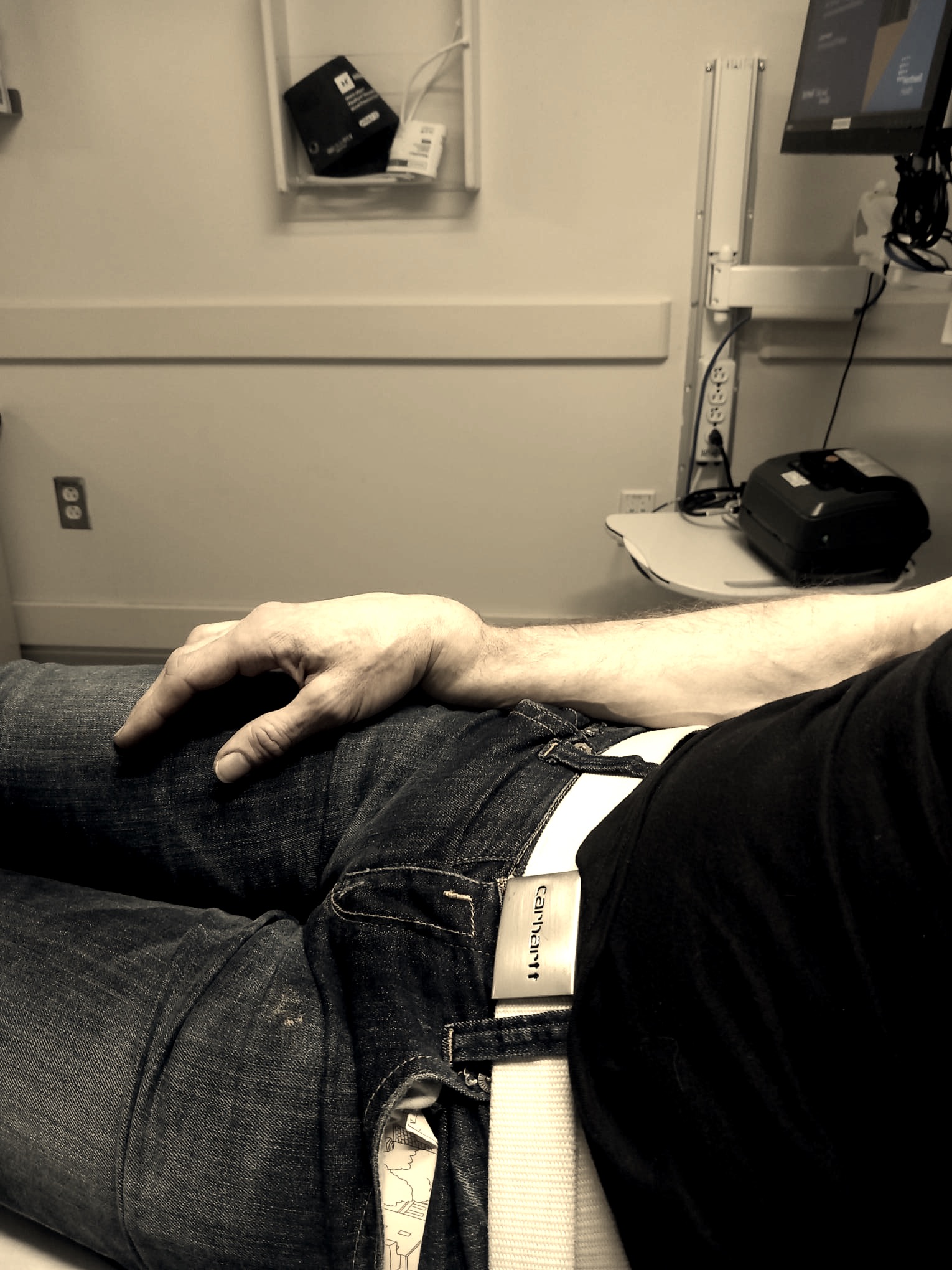
Two months ago, I broke my wrist rollerskating.
It was stupid. Fun, then stupid.
The kind of thing you feel the second you hit the ground.
A titanium plate now holds the bones together. I am six weeks post-surgery and still numb in my little finger. My right hand, the dominant one, the trained one, the one that plays piano, programs synths, scribbles notes, is basically out of office.
And yet, somehow, I’m making more music than I have in years.
I didn’t plan this. Obviously.
But there’s something about having your usual tools taken away that forces you to dig a bit deeper.
Here’s what happened:
At first, I felt stuck. There was a genuine sense of mourning, not just for the pain or the loss of movement, but for the identity it chipped away at.
If I’m not making music with both hands, am I even me?
But then I started using my left hand. Just… out of necessity.
Simple stuff at first. Sketches. Notes. Drones.
Then I leaned in. It wasn’t pretty. It wasn’t easy. But it was different. And different turned out to be the doorway.
The stuff I’ve been writing lately feels… freer. More instinctive. Less polished maybe, but more alive.
Because I couldn’t fall back on my usual habits or muscle memory, I had to think about sound and structure in new ways.
My left hand isn’t trained the same way. It hesitates. It guesses. It gets it wrong. But then it gets it weirdly right.
It’s like my brain is mapping new routes.
I’m not trying to get too mystical about it, but it genuinely feels like something rewired.
Different parts of my brain are lighting up.
Patterns I never used. Tensions I never leaned into.
Space I never left.[
](https://substackcdn.com/image/fetch/$s_!noOG!,f_auto,q_auto:good,fl_progressive:steep/https%3A%2F%2Fsubstack-post-media.s3.amazonaws.com%2Fpublic%2Fimages%2Fcd979acf-c476-4bcb-bd4a-0121285a7525_1530x2040.jpeg)
A few things I’ve noticed:
I’m more deliberate.
Everything takes longer, but I notice more. I listen more.
I’m not over-producing.
With limitations, you get creative. Restraint can be a kind of aesthetic.
My left hand is teaching my right hand something.
Slowness. Honesty. Patience.
I’ve become a better composer. Not just in what I write, but how I feel the process.
I still have freak-out days. Where I think: What if I never get it back? What if I can never play the same again?
And maybe I won’t. But maybe I won’t need to.
And yeah, I’ve thought about Django Reinhardt.
He lost the use of two fingers in a fire.
Everyone said he’d never play guitar again.
He became one of the most important jazz musicians of the 20th century, because he had to adapt. He made his own way of playing. A new sound, born from necessity.
And Paul Wittgenstein?
Lost his right arm in WWI. Commissioned a whole new body of piano work just for the left hand, including Ravel’s left-hand concerto. He didn’t stop. He got weird and ambitious and specific.
There’s power in that.
This injury has reminded me of something I forgot:
That creativity doesn’t come from ease.
It comes from response. From tension. From having to find another way.
I wouldn’t choose this injury.
And I’d be lying if I said it’s been easy.
But I also wouldn’t trade the insight it’s given me.
I’ve written more music in the last few weeks than I did in the last few months.
It’s not because I had more time.
It’s because I had less.
Fewer tools. Fewer shortcuts. Fewer ways to default.
And sometimes that’s where the magic lives:
Not in the perfect take. Not in the muscle memory.
But in the scramble. The stretch. The surrender.
If you're healing, rethinking, adapting, whether it's a hand, a mind, a season of life, just know:
You're still the artist.
The instrument just changed shape.