The Quiet Room is a reader-supported publication. To receive new posts and support my work, consider becoming a free or paid subscriber.
The Hidden Killer: How Noise Is Stealing Our Health (and Humanity)
I don’t wear headphones when I run. Not because I forgot them. Not because they hurt my ears. Not even because I’m trying to be virtuous.
I just can’t stand the disconnect.
There’s something about drowning out the world especially the early morning world that feels like self-erasure. I call it raw-dogging the soundscape, a half-joke I use when I try to explain to people why I run like this. No earbuds. No podcasts. No curated playlists to “motivate” me. Just breath, body, birdsong, the crunch of gravel underfoot, wind weaving through skeletal trees. The texture of the world as it actually is.
And honestly? I think it’s saved me more than once.
We vastly underestimate the role sound plays in our lives. Not just in mood or ambiance, but in health both mental and physical. Environmental noise has become the wallpaper of modern life: traffic, HVAC units, the ever-present hum of infrastructure. And studies now show what many of us have felt in our bones for years: that all this noise is hurting us.
Literally.
The World Health Organization has classified environmental noise as a major public health risk. Long-term exposure has been linked to increased rates of cardiovascular disease, high blood pressure, disrupted sleep, and even reduced cognitive function. In children, it impacts memory and learning. In adults, it quietly stresses the nervous system like a long, low static.
And yet because it’s invisible we ignore it.
But our bodies don’t. We evolved in sound, not just hearing it, but being shaped by it. Our auditory systems are primal, older than our sight, more emotionally direct. Sound tells us where danger is before we see it. Sound is what wakes the body before the mind even knows why.
This is why a sudden sound behind you can trigger your fight-or-flight response. The nervous system is listening, even when you’re not.
And in modern life, it’s overstimulated. Drenched in unfiltered, uninvited noise. The sound equivalent of junk food.
But here’s where it gets more interesting. Because sound isn’t just stressor it can be sanctuary.
If noise can damage, sound can heal.[
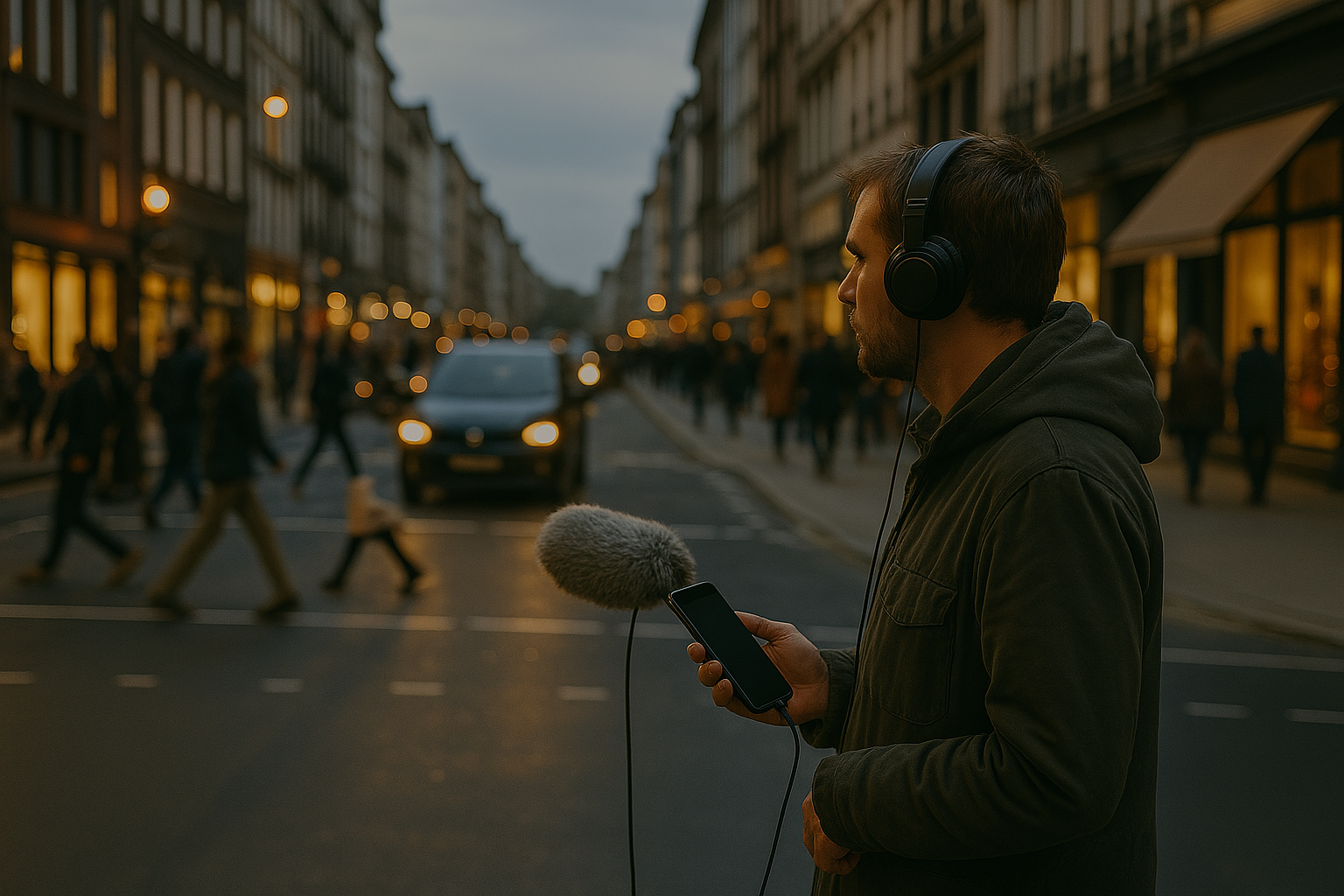
](https://substackcdn.com/image/fetch/$s_!FW-8!,f_auto,q_auto:good,fl_progressive:steep/https%3A%2F%2Fsubstack-post-media.s3.amazonaws.com%2Fpublic%2Fimages%2Fab54272e-48e4-478e-bfd9-6070da69ec02_1024x1536.png)
Think of immersive sound installations those darkened rooms in galleries where you're enveloped in hum, in rhythm, in layered tones that bypass the intellect and reach something much deeper. I’ve stood in those rooms and felt tears come, for no clear reason. Or maybe for every reason. These experiences don’t show us new things they return us to ancient ones. Vibrations that bypass language. Frequencies that remind us we’re made mostly of water.
Music does this too, when it’s not flattened by compression and crammed into background playlists. When you let it swell, when you let yourself fall into it. You close your eyes. The world drops away. Suddenly, you remember what it is to feel. To be inside something instead of trying to manage it all.
This, to me, is the real possibility of sound.
And nowhere is that invitation more radical or more misunderstood than in John Cage’s 4′33″. A composition of total silence. Or so it seems.
What Cage did was revolutionary: he asked us to stop performing and start listening. Not to instruments, but to the world itself. The cough in the audience. The shifting feet. The distant car horn. The murmur of breath and life and atmosphere. He turned the absence of composed sound into a gateway. The piece doesn’t ask us to hear nothing it asks us to hear everything.
In a culture obsessed with volume, Cage offered us a mirror. And it still feels like a dare.[
](https://substackcdn.com/image/fetch/$s_!-HGm!,f_auto,q_auto:good,fl_progressive:steep/https%3A%2F%2Fsubstack-post-media.s3.amazonaws.com%2Fpublic%2Fimages%2Fdb771919-620b-419d-ae10-cfec394cead7_445x343.jpeg)
We live in a visual world. Images dominate, dictate, distract. But sound is air. Omnipresent. Inescapable. And because we can’t turn it off, we’ve stopped noticing it. But sound is a medium of deep connection not just with each other, but with the earth itself. Sound is pattern. Sound is vibration. It is the wave that everything rides.
To listen well is not just an aesthetic act it’s a spiritual one. It’s a way of finding your place again. A kind of remembering. We have the tools, the senses, the bones for this. But we must choose it.
And maybe that means running without headphones.
Maybe that means building spaces artistic, personal, communal where sound is not backdrop but portal. Where listening is not passive, but embodied. Where we sit with tone, with silence, with resonance, until it speaks to us in a language older than thought.
We’ve smothered ourselves in a fog of sonic debris. Lost our ability to hear the real. But we can return to it. By stripping away. By closing our eyes, not to block out the world, but to enter it more fully. To hear the infinite spaces inside ourselves reflected in the hum of bees, the stretch of wind, the quiet intervals between rain.
Sound is always here. We’ve just forgotten how to listen.
The Quiet Room is a reader-supported publication. To receive new posts and support my work, consider becoming a free or paid subscriber.