Not long ago, I stared too long at an AI-generated image of a woman reading in a garden.
The light was soft in that almost tooo perfect way. Her dress looked expensive, like something a costume designer would pick for a BBC adaptation of a forgotten French novel. The book cover was blurred, made-up. The leaves behind her were lush, maybe a little too lush, and they repeated like wallpaper when you looked closely.
I knew it wasn’t real.
And still I lingered.
Something about it tapped into a version of myself I half-remembered. A craving for slowness, stillness, solitude. A woman with time to read, and light warm enough to stretch out in.
I didn’t care who made it. I just wanted to step inside it.
That’s when I realized:
We’re asking the wrong question.
It Doesn’t Matter Who Made It.
(It matters what it does to you.)
In the old world, authorship mattered.
A song was written by that person. A film directed by her. A painting signed in the corner, brush strokes like a fingerprint. Knowing who made something gave it context, and sometimes let’s be honest credibility.
But we’re drifting from that world.
In the age of generative AI, we don’t always know where things come from. Was this article written by a person? Was this photo touched up by a machine? Is this song composed, or constructed? The line gets fuzzier every day.
And soon, I suspect, we won’t care as much.
Because the real question is shifting.
From who made this?
To what does this do to me?
Does it move me?
Make me laugh?
Open a window in my mind I didn’t know was stuck?
Does it feel true even if it isn’t real?
If the answer is yes, does the origin really matter?
The Air We Breathe
AI is no longer a separate thing.
It’s not some shiny new gadget we consult when we’re stuck it’s becoming the operating system of the digital world. It's in your photo app, in your search engine, in your inbox drafts, in your music recommendations. It’s the undercurrent. The wallpaper. The water.
It’s the air.
And once something becomes the air, we stop naming it.
We don’t say, “I just watched a film shot on a digital camera.”
We don’t say, “This was typed on a MacBook Air.”
We don’t say, “This novel was printed with a laser printer on 80gsm stock.”
We just engage with the thing.
And decide if it has weight, or meaning, or resonance.
AI is on the same trajectory.
Soon we’ll stop saying “AI-generated.” We’ll just say: “This is beautiful.” Or: “This feels empty.” Or: “This reminds me of something I can’t name.”
But Who Gets Paid?
(And what are we really paying for?)
This is where things get messy.
Because while art may be about meaning, capitalism is about credit.
Copyright, IP, licensing these aren’t about feeling. They’re about money. They exist so we know who to pay. So we can assign ownership, attach value, distribute profit.
And AI complicates all of that.
Who owns the work if the machine wrote it?
Can you copyright something created with a model trained on a billion other people’s ideas?
Should you get royalties if all you did was write a clever prompt?
It’s tempting to say: AI work isn’t “real” work. It lacks soul. It lacks effort. It’s derivative.
But we should tread carefully here.
Because the system we’re defending hasn’t exactly honored soul or effort in the past.
Van Gogh died broke.
Countless Black artists have been sampled without credit.
Pop music is built on ghostwriters.
Writers are underpaid.
Photographers get their work stolen by brands with too many interns and not enough shame.
So maybe the problem isn’t AI.
Maybe the problem is that our whole system of value has been broken for a while.
The Value of the Human
Let me be clear: human-made things still matter. Deeply.
There’s a kind of trembling magic in something handcrafted, something made slowly, deliberately, with full presence. You can feel it in a handwritten letter. In a hand-thrown mug. In a song written during a breakup. In a story that took a decade to tell.
That kind of making, the kind that touches the maker as much as the audience, will always have value. It will always be needed. We should fund it. We should protect it. We should honor it.
But we should also expand our idea of what counts as valuable.
Because not all creativity is in the making. Some of it is in the seeing.
[
](https://substackcdn.com/image/fetch/$s_!vf8I!,f_auto,q_auto:good,fl_progressive:steep/https%3A%2F%2Fsubstack-post-media.s3.amazonaws.com%2Fpublic%2Fimages%2F79aa50ef-07c0-429c-9e5f-1f4282d20642_1024x1024.heic)
Side Note: On AI and Creative Direction
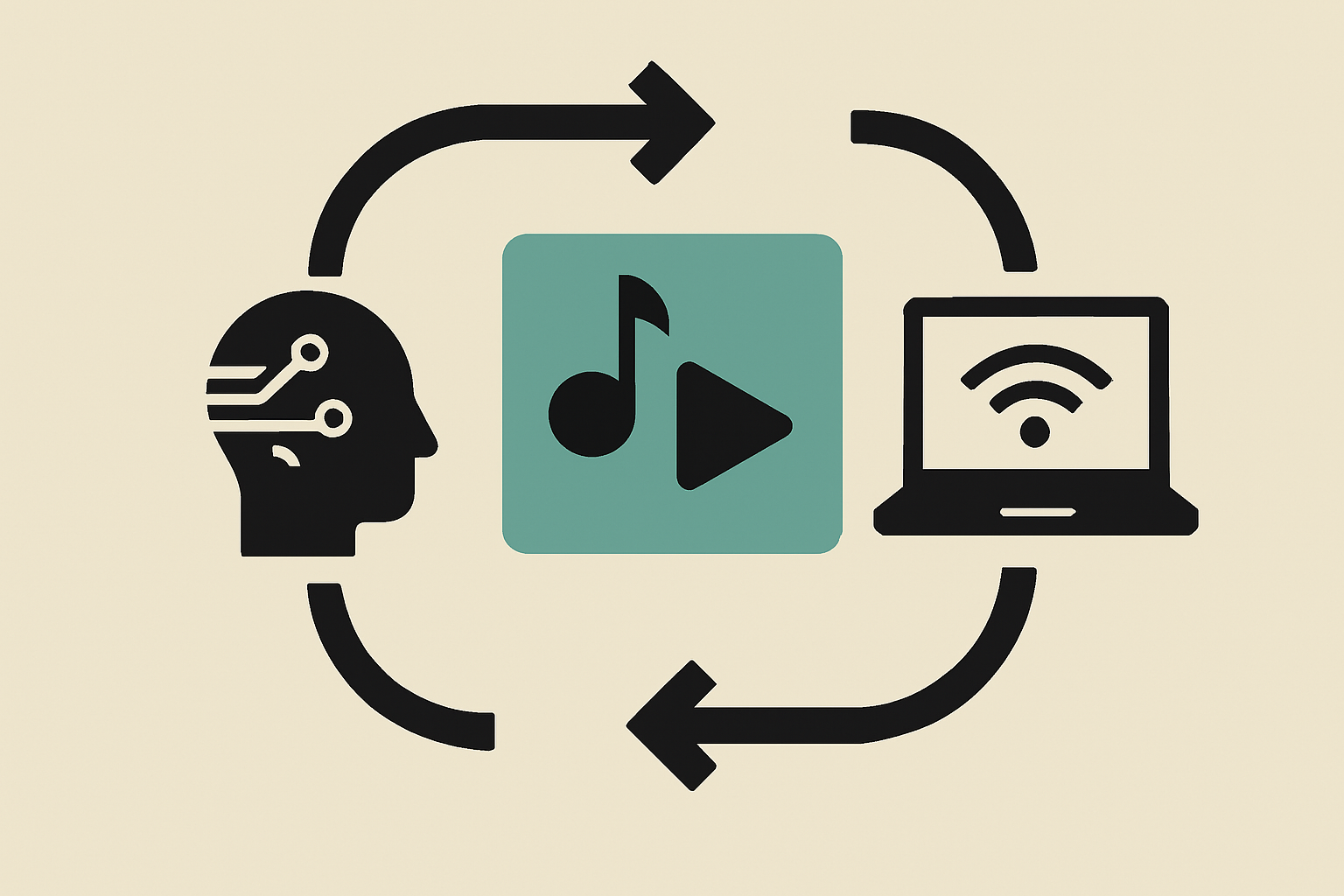
Think of AI not as the artist, but as the crew.
The large language model becomes the scriptwriter.
The image generator, your cinematographer.
The music model, your composer.
Each tool, like an actor, editor, or designer, draws from a vast lineage of influence, remixing the work of countless others before it.
But the human, the one shaped by music, memory, culture, and feeling, remains the director.
Curating. Guiding. Placing.
Infusing the output with emotional weight and cultural relevance.
The art isn’t just in what’s made.
It’s in why it’s made, where it lands, and who it moves.
That meaning? Still ours to make.
The Tastemaker Is Still Human
Curation is a creative act.
In a world where content is infinite, the person who says this one wields immense power. That’s what editors do. What DJs do. What great influencers (yes, even them) do. What curators, critics, and cultural connectors do.
They take something machine-made or not and place it just right. In a feed. In a mood. In a moment. In a person’s day. And suddenly, it matters.
That placement is authorship too.
That’s a kind of meaning-making machines can’t quite replicate.
So maybe the reward doesn’t go only to the coder, or the model, or the algorithm. Maybe the person who gives the thing life in the culture, the one who knows where it fits, who helps it land, deserves credit too.
Maybe we should pay for care.
Pay for curation.
Pay for taste.
But not the snobby, elitist kind. The kind that’s rooted in feeling.
The kind that says: I chose this because I believe it matters, even if I didn’t make it.
Back to the Garden
I keep thinking about that AI image.
The woman in the garden.
The fake book.
The quiet.
It wasn’t real. But the feeling it gave me was.
And maybe that’s enough.
Because at the end of the day, all creation human or machine is just trying to reach someone. To stir something. To echo across the silence.
And we, on the other end, get to decide what stays. What sinks in. What we carry.
That’s still ours.
That’s still human.
That’s still art.